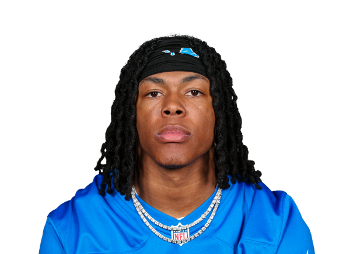

Detroit didn't wait to see what a contract year would look like. Williams signed on to stay through the rest of the decade, which matters more than the number attached to it: it means Dan Campbell's staff is building the next few seasons of this offense around a receiver room they already know how to deploy, not auditioning a replacement plan. Amon-Ra St. Brown still runs the short and intermediate route tree that keeps the chains moving, which leaves Williams free to be the receiver defenses have to account for before the snap.
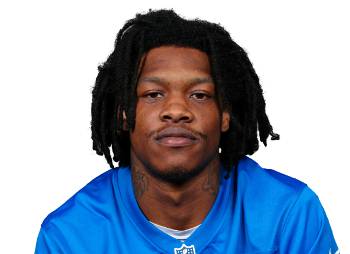
What's changed is that Williams stopped being only a track star with a jersey on. Offensive coordinator Drew Petzing has pushed him to add strength at the top of the route and get off the line faster against press, specifically because corners have started trying to grab him early to take away the release. St. Brown has said flatly that Williams' speed forces a safety over the top on nearly every snap, which is the whole point of him: he doesn't have to win his route to affect the defense, he just has to be lined up. When he does win it, though, he's no longer strictly a fly-route guy. He's picking up real work on curls, digs and comebacks now, routes that used to belong to somebody else in this offense.
The honest risk is that none of that shows up on early downs in a big enough way. Williams still lives disproportionately off explosive plays rather than steady target share, and Petzing's offense runs its highest-value looks through St. Brown first. If the shorter-area route work doesn't stick as a real weekly floor, Williams stays what he's mostly been so far: a boom-week receiver who needs a big gain to justify the target count, not a guy you can pencil in for a stat line every Sunday.
The name worth measuring him against is Jaylen Waddle, who was just uprooted from Miami and dropped into a brand-new Denver offense with a quarterback he's never played with and a coordinator who's still figuring out how to feature him. Waddle's separation skills are as real as Williams', but he's starting from zero in that building. Williams isn't starting anything over. He's running expanded routes for a coordinator who already trusts him, next to a receiver who occupies the coverage most likely to bracket him, in a building that just told him with a check that it's not going anywhere. Given the choice between proven speed in a new system and proven speed in a system that's still teaching him new tricks, take the receiver who isn't rebuilding chemistry from scratch.