
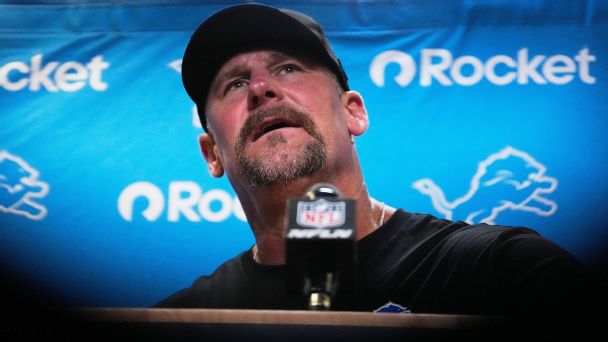
The backfield Gibbs shared for two years doesn't exist anymore. Detroit shipped David Montgomery to Houston this offseason and didn't bring in anyone built to replace him -- Isiah Pacheco is there to spell Gibbs, not split the job with him. Dan Campbell said it himself: Gibbs is the bell cow now, and the plan is to lean on him more than ever. Add in a new deal that finally settled his contract standoff before the season even started, and there's no lingering question about workload, buy-in, or who touches the ball when the game is on the line.
What made Gibbs worth building around in the first place is that he doesn't need volume to hurt you -- he's a home-run threat on any given snap, and Detroit uses him that way. He's split out, motioned, handed the ball on jet sweeps, released on option routes out of the backfield -- Ben Johnson's offense (and its successors) never let him become predictable. As the season wore on last year his workload climbed on both sides of the ball, more carries and a lot more targets down the stretch, without any drop in efficiency. He wins with vision and burst more than with size, which is exactly why Detroit keeps finding new ways to get him in space instead of just running him into a pile.
The honest risk is that Detroit just handed a smaller back a season-long workload with no proven answer behind him. Pacheco is a change-of-pace piece, not someone who's shown he can hold up over a real stretch of starts, and Gibbs dealt with a back issue that lingered into camp. A back his size taking on a bell-cow role for the first time is unproven until it isn't -- and if he misses time, Detroit doesn't have Montgomery's steady 15-touch security blanket to fall back on anymore.
Bijan Robinson is the closest thing to a mirror image on the board -- another explosive, undersized back who just signed his own record-setting extension this summer and just took over an offense that finally trusts him with everything. The difference is the machinery around each of them: Robinson still shares touches and doesn't have Detroit's level of receiving infrastructure pulling defenders away from the box. Gibbs plays behind a line built to run and next to enough receiving threats that defenses can't just stack numbers on him. Given the choice between the two ascending, newly-paid backs, the one with the better supporting cast is the one to build a team around.