
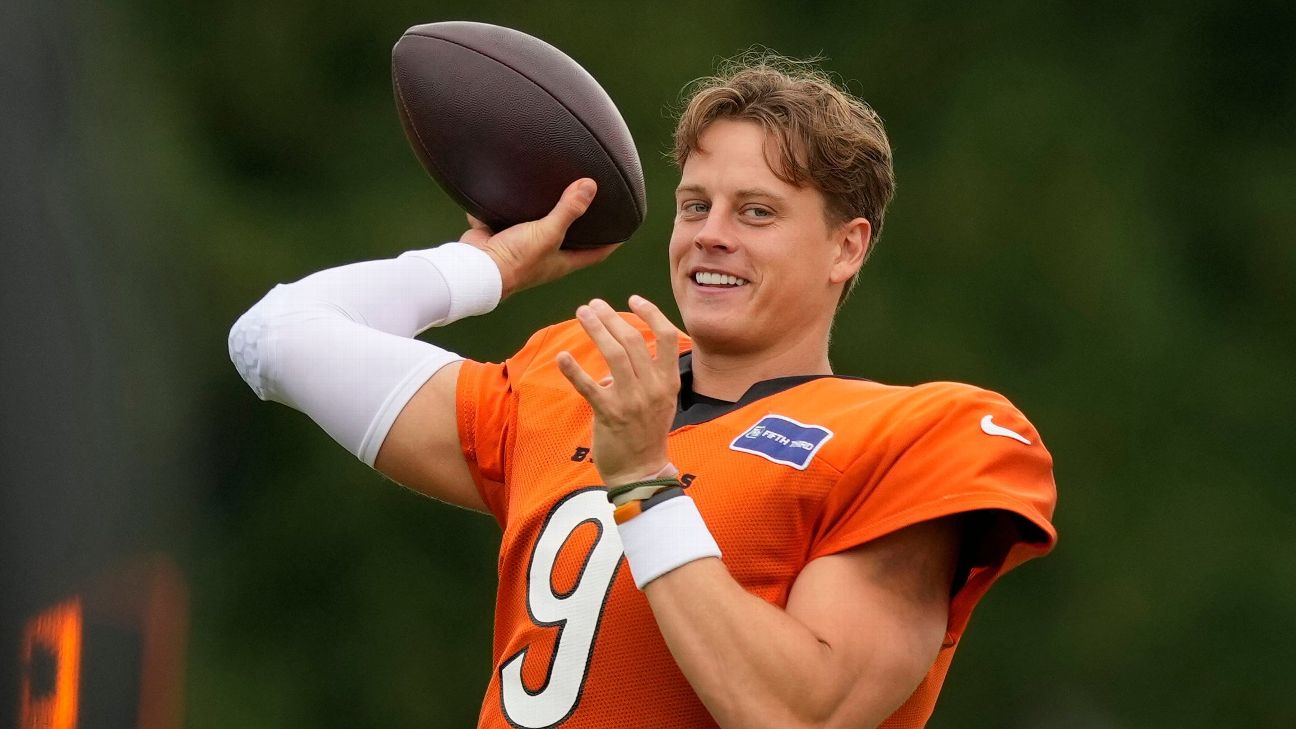
The version of Chase walking into this season isn't chasing targets anymore — he's chasing chunk plays. He led the league in that department in each of the last two years and still watched the offense finish near the bottom of the NFL in explosive-play rate, a gap Chase himself has pointed to as the thing left to fix, not the volume that got him here. Offensive coordinator Dan Pitcher has said the same thing out loud: Cincinnati needs to get back to hitting big plays the way it did during Chase's rookie run to a Super Bowl, when he was one of the most dangerous deep threats in the sport instead of just the most targeted possession receiver. Burrow's return to full health matters here more than any scheme tweak — a big chunk of Cincinnati's contested-target problem traces back to a backup quarterback who threw into tight windows out of necessity, not design, and that alone should open up cleaner looks.
What makes Chase worth building around isn't just that he's schemed the ball — it's that he wins it even when he isn't. He commands the highest first-read share on his own team and still ran a route or drew a target on nearly a third of his snaps, the profile of a receiver defenses know is getting the ball and still can't stop from getting it. He boxes out at the catch point as well as anyone alive, which is exactly why Cincinnati leaned on him to bail out an offense that couldn't create separation any other way last season. The ask now is different: fewer 50-50 balls turned into first downs, more real explosive plays where he's uncovered instead of just unstoppable.
The honest risk is that the explosive-play problem was never really about Burrow's health — it's about whether Cincinnati's offensive line and scheme can create the kind of clean pockets and downfield windows that turn a target monster into a big-play monster. Chase drew heavy volume in single coverage last year and still finished the season without the long touchdowns to match the targets, which means some of this is out of his hands entirely. If Pitcher's offense doesn't actually change how it attacks defenses, Chase is right back to leading the league in targets while someone else's receiver leads it in touchdowns.
Nacua is the receiver in the same range who does the same job with a completely different supporting cast — he wins at the catch point just as often, but he's doing it inside an offense that already has an explosive run game and a healthy dual threat at running back drawing coverage away from him. Chase doesn't get that help; Cincinnati's whole passing game is built around forcing the ball to him and living with what the defense does about it. That's the tradeoff: Nacua's per-game production last year actually outpaced Chase's, but he's more schemed into easy touches, while Chase is the one manufacturing his own catches against a defense that knows exactly where the ball is going. Take the receiver who's proven he can win the hard way every single week.