
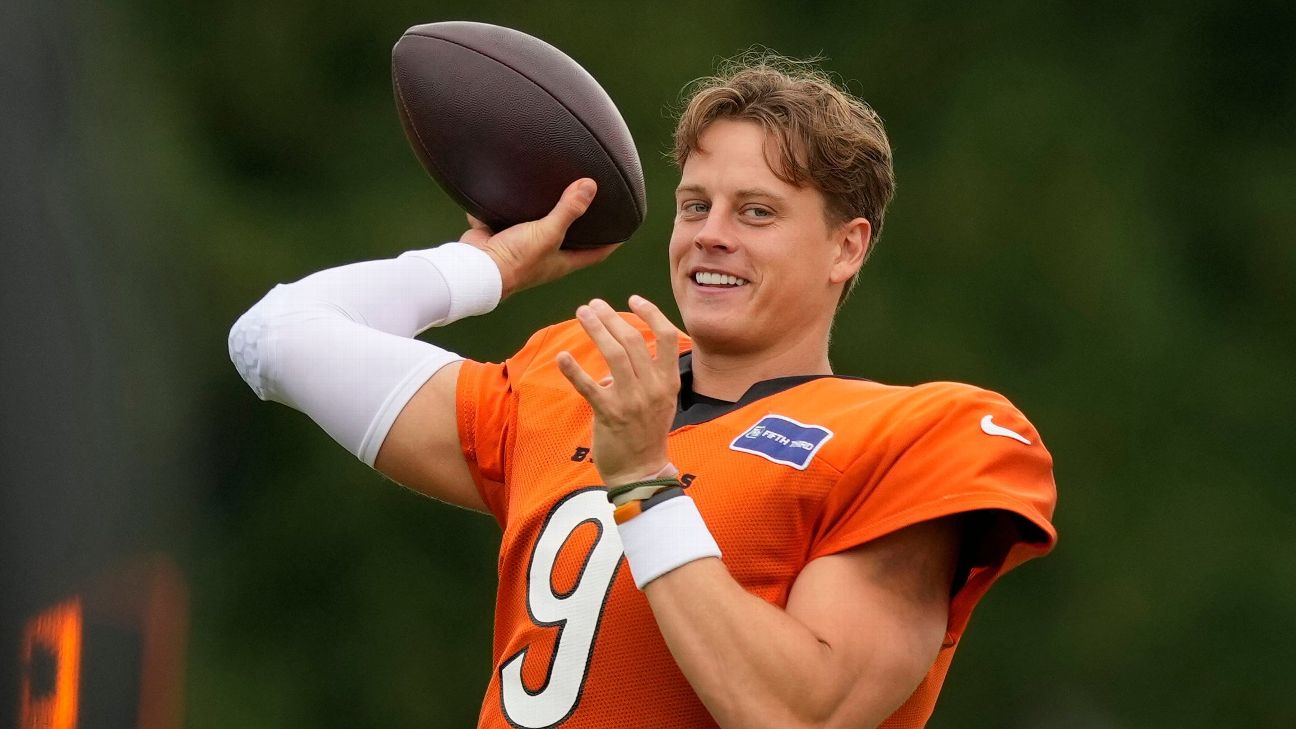
Higgins spent two straight offseasons on the franchise tag and once asked his way out of Cincinnati entirely. That fight is over. The Bengals locked him up long-term last spring, and camp reports have him and Burrow picking up exactly where a six-year partnership left off, including a red-zone score in team drills that nobody on the beat treated as news. Andrei Iosivas is still the No. 3 option behind him, which means the only thing separating Higgins from Chase in this offense is Chase.
What makes Higgins dangerous isn't route-running craft, it's real estate. He wins on the boundary against press coverage, boxes cornerbacks off the ball on back-shoulder throws, and turns 50-50 balls into catches at a rate his size alone doesn't explain. Cincinnati has leaned into that more each year, funneling a bigger share of its red-zone looks his way specifically because Chase draws the coverage rotation elsewhere. That's the whole equation: Chase creates the space, Higgins finishes in it, and he finishes more of those looks than almost anyone at the position.
The honest risk isn't a role change, it's his body. Higgins missed time to concussions twice last season, in different stretches, and has now lost real chunks of three different seasons to injury. None of it has dented his per-target efficiency when he's actually on the field, but a receiver who wins with contested catches over the middle and near the goal line is a receiver who's going to keep getting popped, and Cincinnati doesn't have a real backup plan for his snaps.
Smith runs the same job in Philadelphia, second option behind a bigger name, and he does it with quickness and route detail Higgins doesn't have. But Smith isn't winning at the catch point the way Higgins does, and he isn't the one his offense turns to specifically once the ball crosses the 20. Given a healthy runway, Higgins is the better bet to keep finding the end zone even in a smaller role than the receiver ahead of him.