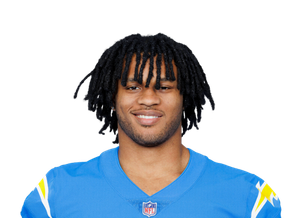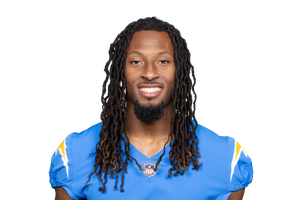
The story of McConkey's second year wasn't a decline so much as a shrinking role: Allen out-targeted him on first-read throws, matched him in the red zone, and pushed him out of the slot, his best spot, often enough that his snap rate there dropped noticeably. That competition is over. Allen wasn't re-signed, and the Chargers went and hired Mike McDaniel to run the offense, a play-caller who built his name on getting shifty receivers the ball in space through motion and quick game rather than asking them to win jump balls downfield. Jim Harbaugh spent camp calling McConkey uncoverable in one-on-ones, which is the kind of thing a coach says about a guy his staff has decided to build around, not a complementary piece.

What made McConkey a problem as a rookie was never size or top-end speed -- it was how fast he got in and out of a break and how comfortable the Chargers were letting him work the middle of the field on shallow crossers and option routes, the kind of stuff Greg Roman's offense barely called. McDaniel's system is built on exactly that: receivers in motion, picking apart zones with spacing and timing rather than winning one-on-one down the sideline. That's a scheme finally built around what McConkey already does well, instead of asking him to be someone he isn't.
The honest worry is durability, not target competition. He missed time in college with back and ankle trouble at Georgia, then spent his second pro season nursing a hip injury, a shoulder sprain, a knee sprain and a toe issue that limited his practice reps down the stretch, on top of a hamstring strain that cost him reps all offseason before camp. None of it has been the kind of injury that ends a season, but it's a pattern, and a receiver whose game is built on quickness and short-area burst is the type who can lose a step to exactly that kind of wear.
Egbuka is the other route-runner who just inherited a franchise receiver's old job -- Tampa Bay let Mike Evans leave for San Francisco, and Egbuka is the one taking over the targets he leaves behind, the same setup McConkey is in with Allen gone. The difference is McConkey has two years of built-in rapport with his quarterback and a play-caller who's already said, in effect, that the offense is being built to get him the ball; Egbuka is stepping into a No. 1 role for the first time with a rookie wall still fresh in the rearview. Given the choice between the receiver who's proven he can do it and is finally getting a scheme that fits him, and the one who's guessing at how a full season as the top read will go, McConkey is the one with less left to prove.