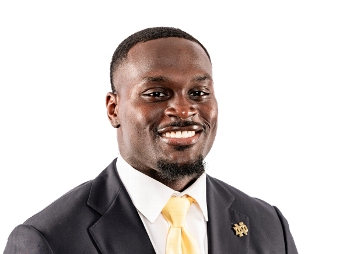

Arizona brought in Mike LaFleur this offseason, and LaFleur's history is running heavy tight end personnel out of his old Rams offense at a rate the Cardinals never approached. That's not a threat to McBride, it's a bet on him. LaFleur has said publicly he wants to stretch McBride's route tree deeper into the intermediate area instead of leaning on the short, high-volume stuff that made him the focal point of Arizona's offense last year. The QB room behind him is still unsettled beyond Jacoby Brissett, which historically has only made Arizona funnel more through their tight end, not less.

What makes McBride different from the rest of the position is that he's a legitimate in-line blocker who also runs a full route tree, which is why Arizona can put him anywhere on the formation and dare a defense to declare a matchup. He wins after the catch as much as he wins at the catch point, turning short completions into extended gains because he's built like a big receiver and moves like one after contact. He set the all-time reception record at his position doing exactly that: with quantity, not with a burst of huge plays. That profile means his weekly floor doesn't depend on a defense blowing a coverage; it depends on Arizona simply choosing to throw to him, which they have never hesitated to do.
The honest risk is the offensive philosophy itself. LaFleur has talked about wanting more balance than the pass-heavy attack Arizona ran a year ago, and if that balance shows up as designed runs instead of designed throws, McBride's target share is the one that gets trimmed to pay for it. He's also going to see more three-tight-end sets this year, which by definition means more snaps split with other bodies on the field even if he remains the one who matters. None of that showed up in his lone series of preseason work, where he got starter treatment and nothing else, but it's the one way this offense stops being built around him.
Brock Bowers is the only real argument against him. Bowers wins with more explosive vertical speed for the position and produced RS points even behind one of the worst-graded passing offenses in the league, which says everything about how little he needs from his quarterback. McBride's case back is usage: he set the volume record playing through one of the most productive tight end seasons in NFL history and has barely missed a game doing it. Bowers is the higher ceiling if the play-calling ever opens up in Las Vegas. McBride is the safer bet that the volume never disappears, because Arizona has shown for three straight years that it won't let it.