
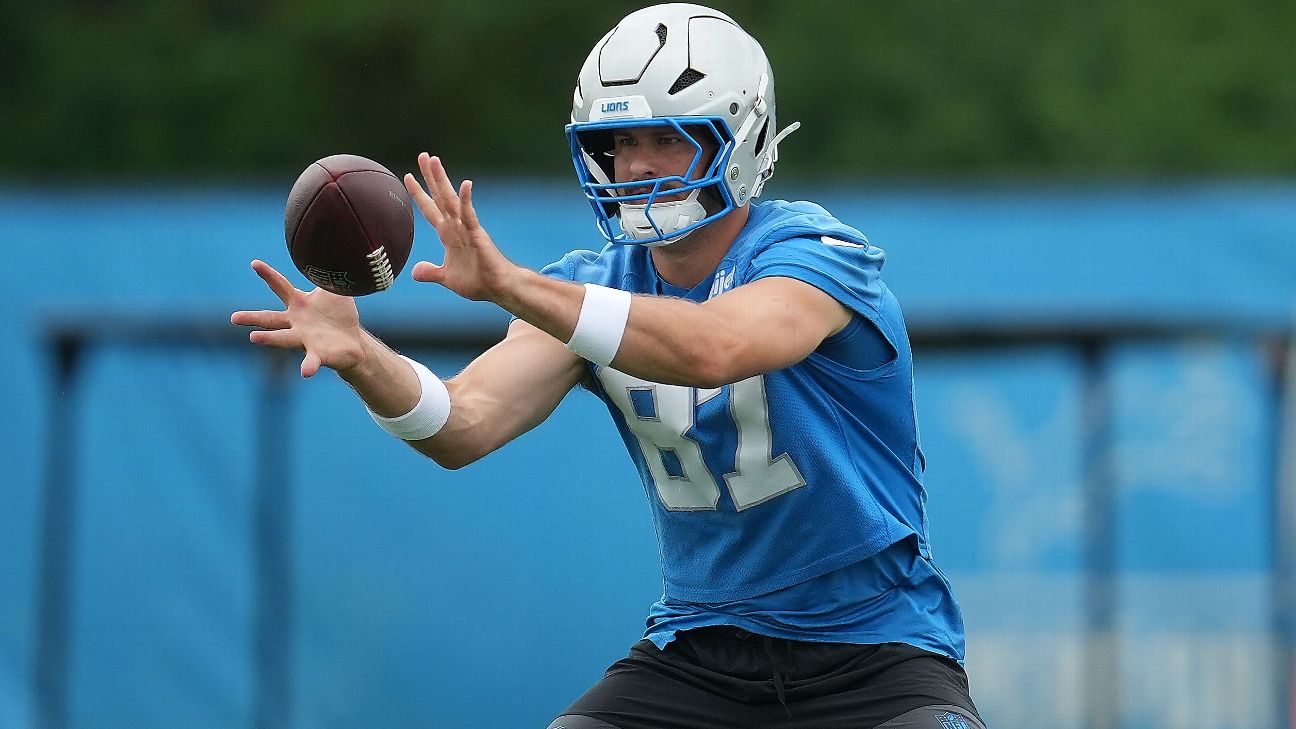
LaPorta walks into the season as Detroit's clear TE1 even after the Lions added Brock Wright and Tyler Conklin behind him, and even after a November surgery to repair a fully herniated disc that ended his 2025 early. He rehabbed the nerve damage in phases, glute to hamstring to calf, and by midsummer was cutting and sprinting with no restrictions. The bigger swing for his role isn't the recovery, though, it's the arrival of Drew Petzing, whose Arizona offense built its identity around stacking multiple tight ends on the field and funneling the passing game through the top one.
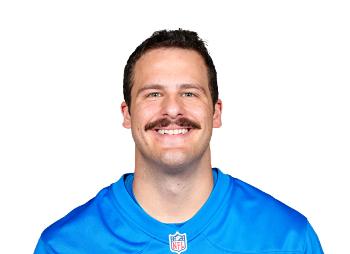
What made LaPorta the fastest tight end in a generation to establish himself is the route tree, not just the catch radius. He runs seam and dig concepts that get him matched on linebackers and safeties instead of corners, and he wins those matchups with footwork most tight ends his size don't have, not just size. Detroit uses him from the slot as often as inline, which stresses a defense into picking its poison, and in the red zone he's the answer when Jared Goff needs a big body who can also separate rather than just box out. Petzing's history says that guy becomes the focal point of the passing game, not a complementary piece to it.
The honest risk is that a back that required surgery doesn't always announce its second injury with a clean signal, and a hip issue in a player already managing a spine repair is the kind of thing that lingers into game speed even after the swelling calms. There's also a target ceiling question: Amon-Ra St. Brown, Jahmyr Gibbs and Jameson Williams all eat into a finite number of throws, and if Petzing leans as run-first in Detroit as he did in the desert, LaPorta's catches could come in bunches rather than every week.
Tucker Kraft is the name worth measuring him against. Kraft wins in similar spots, breaking tackles after the catch and threatening the seam, but he's doing it in a Green Bay offense that still funnels its best looks to its receivers first. LaPorta's coordinator built his last tight end into the focal point of the entire passing game rather than a change-of-pace piece, and that structural advantage is the difference. Health is the only thing standing between LaPorta and being the clear answer in that argument.