
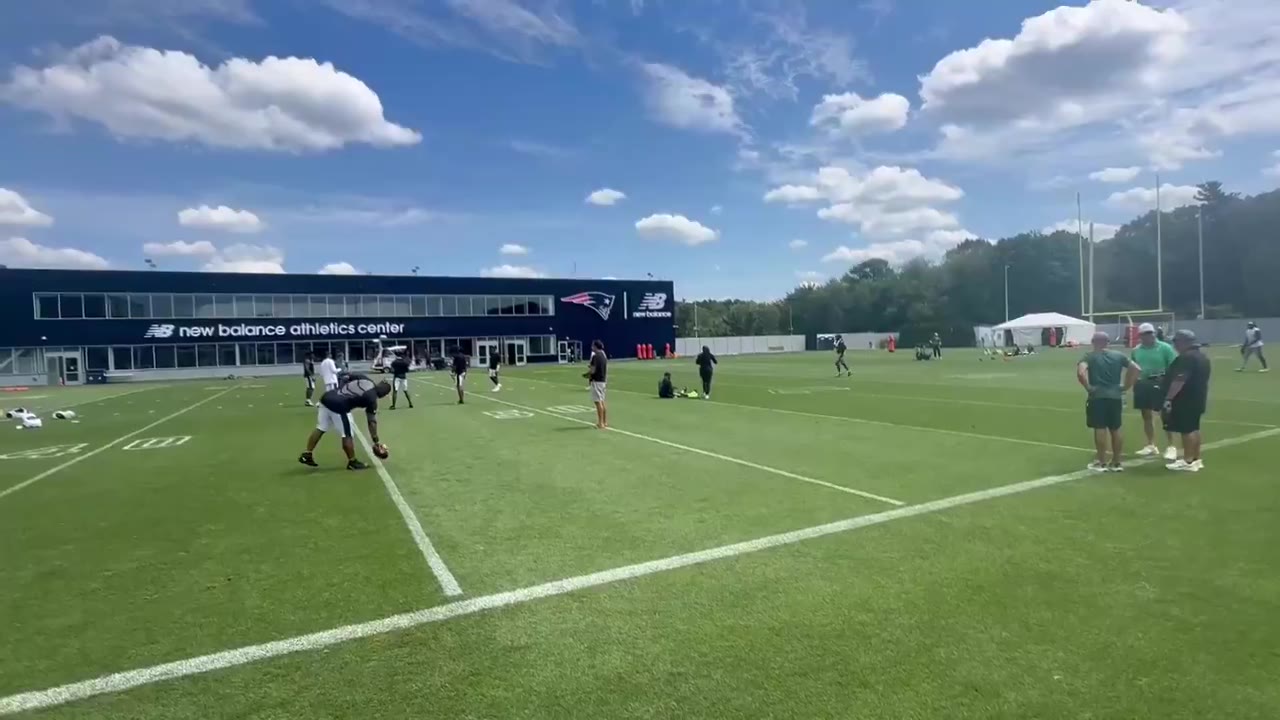
Brown didn't ask his way out of Philadelphia so much as get shipped to the guy who built him in the first place. New England sent a future first-rounder and a fifth to pry him from the Eagles, which put him back with Mike Vrabel, the coach who ran him out in Tennessee before either man left for somewhere else. He walks into a brand-new install under Josh McDaniels as the clear top target, throwing to Drake Maye instead of Jalen Hurts, with Romeo Doubs lined up outside opposite him and DeMario Douglas working the shorter stuff from the slot.
In Philadelphia he turned into a specialist he never really asked to be. With Hurts rarely working the middle of the field, Brown lived on hitches and go balls — the offense's answer to pressure was often just to throw it up and let him go win it. That's still what he does best: sell an outside release hard enough that a corner opens his hips for the vertical, then snap back across his face on the slant, and once the ball's in the air he's fighting for it instead of running away from someone. It's a different kind of receiver than one who separates before the throw ever leaves the quarterback's hand — Brown makes his case after the ball is already up.
The honest risk here is fit, not talent. He and Vrabel had real friction the first time they worked together in Tennessee, and last season in Philadelphia he was already complaining publicly about his role while fighting a drop problem that hadn't followed him around before. Now he's learning an offense from scratch with a new quarterback in a room he wasn't part of five months ago — Vrabel called him out in front of the team for a drop the first day pads went on, and in joint practices this month he still couldn't quite connect with Maye on a go route he'd won clean. None of that disqualifies him. It's exactly the kind of transition that turns a WR1 into a guy who needs half a season to look like himself.
The receiver he's most naturally weighed against wins the route before the ball ever leaves the quarterback's hand — Jefferson sinks his hips, changes speeds, and is already open by the time the throw is in the air, no contact required. Brown has never had to be that; his whole game is built on winning the fight after the catch is already contested. That's the actual choice a fantasy team is making: bet on the route runner who creates his own separation on a steadier situation, or the bully whose ceiling depends on a new quarterback and a new staff actually getting him the ball the way his old team never fully did. Get that install right, and Brown's ceiling is the higher one. Stay clunky, and Jefferson's floor is the safer bet.