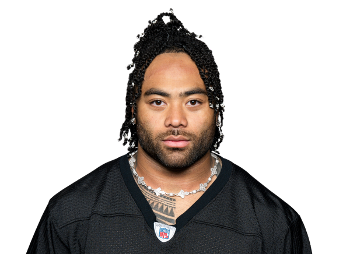

The Bears sent DJ Moore to Buffalo this offseason, and that trade did more to shape Burden's 2026 than anything he did in camp. Moore and Olamide Zaccheaus combined for nine touchdowns and fifteen red-zone targets a year ago, all of it now unclaimed in an offense that still has Rome Odunze and Colston Loveland in it, but no longer has its leading man. Ben Johnson gets a full offseason with Caleb Williams this time, and the receiver he's talked up the most since spring is Burden.

Missouri ran him almost exclusively out of the slot, and that's still where he does his best work: quick-game routes, stop-start burst to shake off-coverage, then contact balance that turns a five-yard hitch into a broken-tackle chunk play. He wins more contested catches than he loses despite a frame that isn't long for the position, which is exactly the profile a coach starts scheming toward the goal line instead of away from it. He barely got there as a rookie — Chicago kept him almost entirely off the field inside the 20, and his expected-touchdown rate reflected it. That's the gap Johnson has said he wants to close.
The counter-case is that nothing about the expanded role is proven yet. Burden ran a shortened route tree in college because Missouri's scheme created easy looks for him, not because he'd beaten every route on the sheet, and NFL corners with real length have already shown they can take away his catch point. If Chicago's red-zone answer ends up being Loveland's size or Odunze's speed instead of Burden's route quickness, the target bump from Moore's exit doesn't automatically become touchdowns.
Set him next to DK Metcalf and the shapes don't match. Metcalf wins outside as a boundary X, high-pointing the ball down the field for a Pittsburgh passing game that's still figuring out what it is with him in it. Burden wins underneath and after the catch, inside an offense that just cleared its top target and is building around a young quarterback entering his second year with the same coordinator. Betting on Burden is betting that internal continuity beats external name recognition — and given how unsettled Pittsburgh's passing attack still looks, that's the easier side to take.